
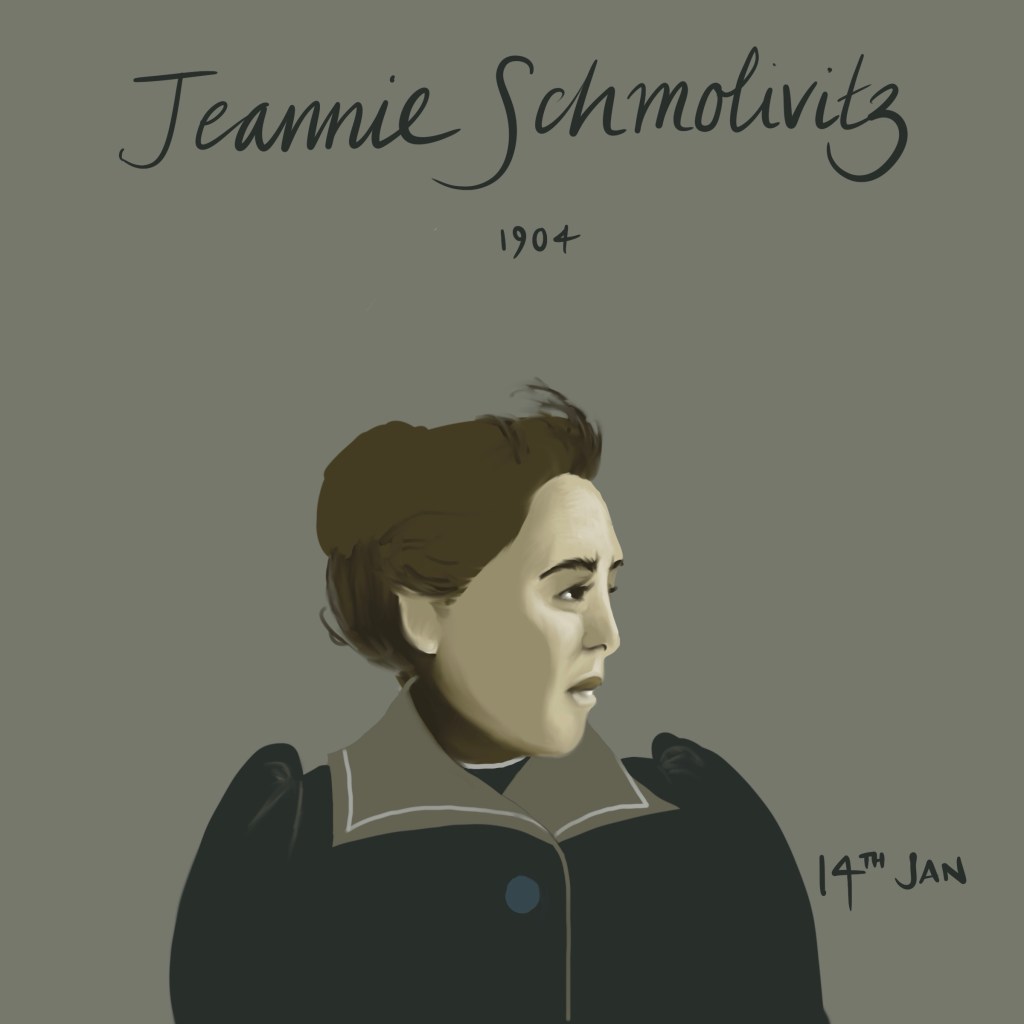
14th January 1904
Known as the Lady Hermit of the Cornish Cliffs, ‘Jeannie’ Schmolivitz was from the small town of Shavel in Russia (now known as Siavliai in Lithuania).
Her family were part of the Jewish community in Shavel, and her family, like so many Jewish families at the time in Russia, had been hit hard by Tzar Aleksandr III’s reactionary politics. Among other things, Jews were expelled from universities and prevented from working in certain professions. So although Jeannie was intelligent and well educated there was little chance of advancement in her homeland. In early 1890s she travelled alone to America and became engaged to a young man in Philadelphia, (whether she was sent as an arranged marriage or met him there is unclear).
Jeannie was jilted by her fiancé who left her to marry another woman, but he died shortly after the wedding! It was this that left Jeannie, alone and far from her family, heart broken and having a mental breakdown.
In 1902 she appears in the UK, arrested in Arundel for wandering without ‘visible means of support’. She may well have been here way before this as there was an account of a female vagrant of Russian decent in Bournemouth and in London. She was imprisoned for upto 14 days of hard labour in Portsmouth prison, however because of her poor mental health she was interred in the Workhouse infirmary. At the Workhouse she was described as ‘superior to other inmates’ and although she ate with her fingers, she appeared ‘cultured and ladylike’. When she was arrested she was found to carry with her a fair sum of money and letters written in Yiddish which were from America dated 1895 and 1897. She said she ‘had no name, no mother, no father, no friends’.
I feel for her so much – lost and wandering, seemingly to have lost all memory of her previous home life and her family back in Russia.
In the early autumn of 1903 she was in Cornwall, as she was seen by two lady cyclists travelling round the Lizard, she was haggard and her lips stained brown from eating blackberries.
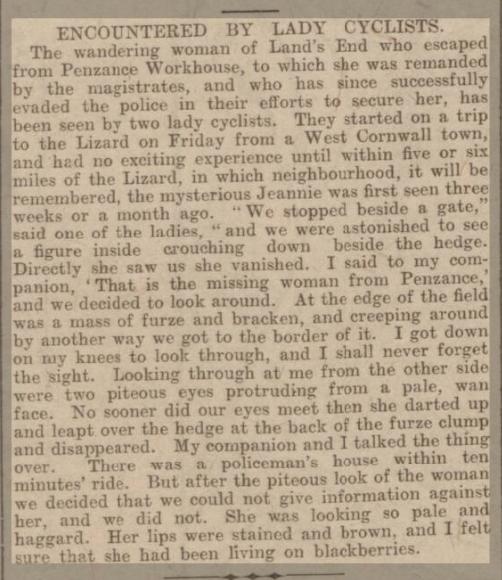
By late autumn Jeannie had travelled as far as Land’s End and was living in caves along the North coast, seen by many wandering along the cliffs, some believing her to be a ghost. She again was caught by the Police and charged with vagrancy, telling the Police that she slept in clefts in the cliffs and only begged for food if she couldn’t find any fruit or berries.
In her possession, were the letters and also a photograph, plus 3 turnips and a small camping stove, and an American Citizenship form for a man from Poland. She was very upset by her arrest as she said she wasn’t causing any problems or hurting anyone else. She felt strong by the sea.
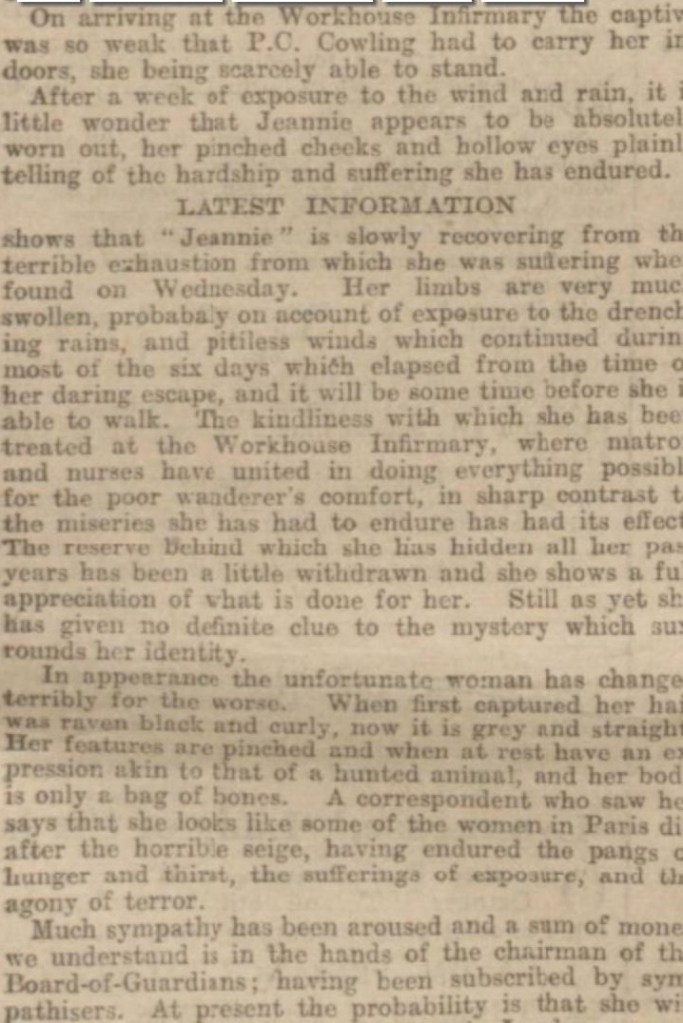
She was sent to Madron Workhouse and escaped twice. On her second recapture she was in a dreadful state, barefooted, wet through, pale and terribly thin. Her black hair was now streaked with grey and her face hallowed, her eyes sunken. The policeman had to carry her into the infirmary as she was too weak to walk.
The Workhouse Infirmary matron and nurse looked after her well, building her strength back up.
By now her story was reported far and wide, the Lady Hermit of the Cornish Cliffs was national news, and the Jewish community in Penzance and Plymouth raised money for her. In fact the whole of Penzance was taken by her sad situation.
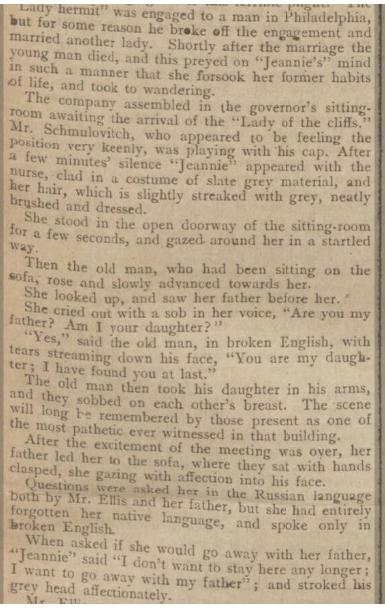
The Jewish community were determined to find her family, so Mr Ellis of Plymouth Hebrew Congregation used his contacts to trace her family right back to her father in Shavel. Her father was so relieved that his lost daughter was now found he wanted to come over to Cornwall and collect her, but he did not have the money to do that. So the people of Penzance and the Jewish community in Shavel raised the funds to allow him to travel.
Jeannie was still in Madron Workhouse when her father arrived in Penzance, they were reunited in the Governor’s office. She was very confused and looked alarmed at first, but when she saw the old man walk towards her she said “Are you my father? Am I your daughter”. They both sobbed into each others arms.
Jeannie was at last safe.
POSTSCRIPT: The history of Shavel and other Jewish communities in Russia are not without more recent horrors.
In 1914 the town of Shavel, suffered a terrible purging of it’s Jewish population when the Tzar ordered all Jews to leave. After the Tzar had ordered the clearance, from a total population of 23,600, there were no Jews living there at all.
Many must have drifted back, as in 1940 there were over 6000 Jews living there but again the town was cleared of it’s Jewish population, this time it was the Nazis .
If she was still alive in the 1940s she would have been in her 70s when the Nazis purged the Jews in Shavel. Unfortunately historical research can’t help us know what happened after Jeannie returned to Russia in early 1904. I hope she had some years of family love and kindness in Shavel.
References:
Blog by David Wilson
Cornwall Live article
Hermitary website article
Article by James C Pearce
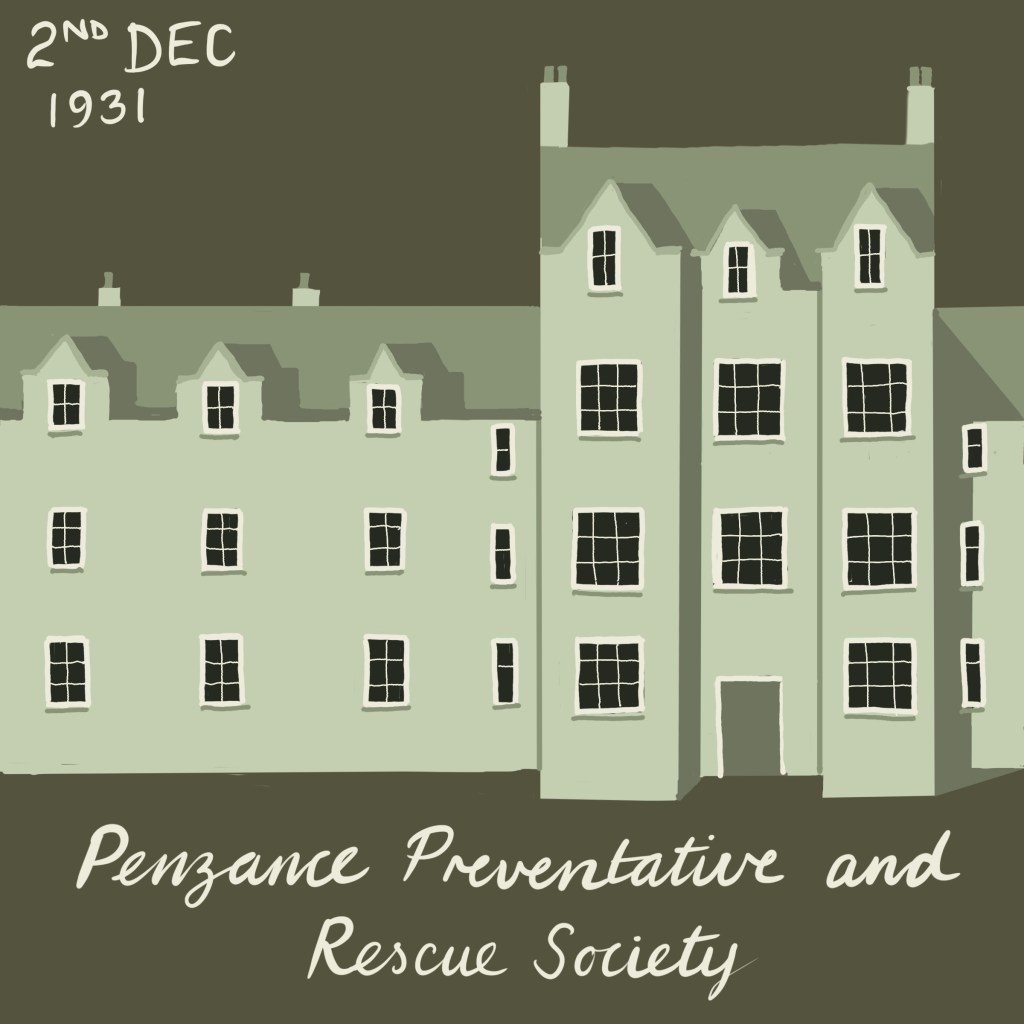
Here’s an illustration from December Cornish Year showing the Madron Workhouse:
 The Sunny Cupboard
Leave a comment