
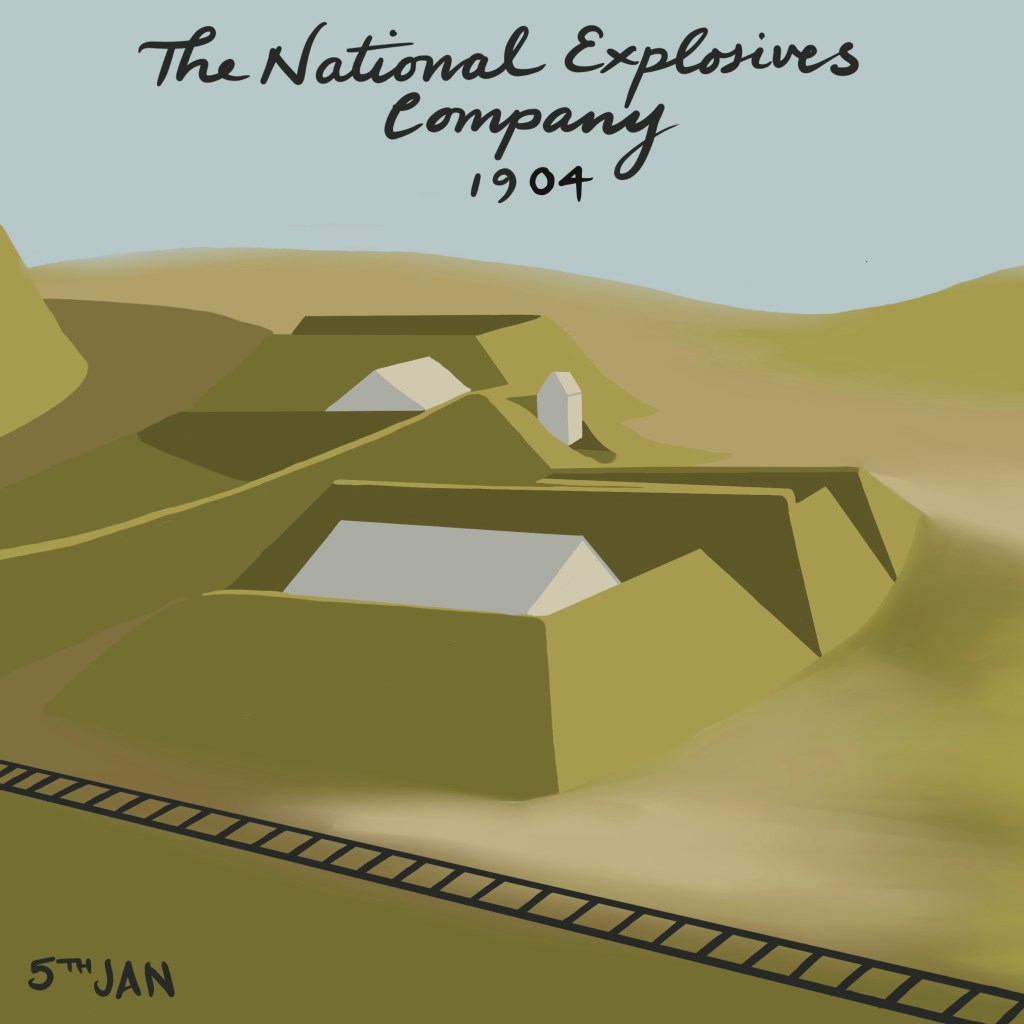
5th January 1904
The National Explosives Company grew out of the Kendall Gunpowder Company at Ponsanooth, when the company directors saw the opportunity in transferring production to dynamite for the local Cornish mining industry.
The Alfred Nobel (he of the Nobel Prizes) patent for manufacture of nitro-glycerine had now expired so it was perfect timing for the Kendall company to relocate and rebrand. Thus The National Explosives Company was formed in 1888 and built in the sand dunes of Upton Towans near Hayle.
The sand dunes and hills around Upton Towans formed an ideal location to build small huts surrounded by banks of earth and sand. These crude precautions were to safeguard the rest of the site should there be an explosion. The site covered some 300 acres at it’s peak (becoming locally known as Dynamite Towans) and became the most successful independent chemical explosives manufacturer in the late 19th century.
Ten years before the fateful day of 1904 there had been another accident, September 4th 1894, when two men, Samuel Pick Craze and James Perry, lost their lives when mixing volatile nitro-glycerine with nitro-cotton, whilst heating it gently, to form nitro-jelly (known as gelignite). It can take two hours and just before the explosion the Foreman, Elisha Trewartha, had literally popped his head in to see how the two men were progressing. Some of the jelly was being turned out carefully into the machine, everything was as it should be so he walked off. He was about 100yrds from the hut when it exploded, an axle from the machine was found half a mile away. Accidental death was the conclusion at the inquest.
Move forward ten years, the wooden huts are 60yrds apart, each one with it’s protective earth banks surrounding it. Two huts were interconnected via a long channel where newly made explosive would be piped to the second hut. Each hut had just two men working in it, families were split up and since the accident of 1894 there had been no further instances. So in 1904 it was very much business as usual.
However, at 11am, there was a huge explosion that sent shockwaves across the West Penwith area.
Two huts, that were joined by a channel, exploded without warning and to this day the reason for the explosion has remained a mystery. But five men lost their lives. Four men and the two huts were blown to bits, as the local newspaper The Cornishman stated;
“the men who worked there are blown to atoms”
The explosion, a ‘huge dull, hollow boom’, was so strong that it was felt in Penzance where windows in St John’s Hall were shattered. St Ives saw plate glass shop windows blow out and many roofs were badly damaged. It was akin to an earthquake, and many people were injured by flying timber on site.
Above the whole of Dynamite Towans hung a heavy low black cloud, and employees and relatives gathered.
There were five fatalities that day, the four men in the huts were Andrew Curnow of Connor Downs, Walter Luzmoor of Gwithian, William Clift also of Gwithian, and Simon Jory of Mount Pleasant. The fifth peron to be killed was a new employee, a Swede called Oscar Shaholme, he was in another hut lagging pipes with clay, when he was thrown to the ground by the blast and died of his injuries.
Such a sad day.
WWI saw the site change to producing explosives for military use, primarily for the Royal Navy, and output soared with around 1800 people, mainly women working in producing terrifying amounts of explosives. After the Great War and with the local Cornish mining in decline the factory went into liquidation finally closing in 1920.
Over the following years the site was cleared of most of its buildings, however a few remained and in the 1960s/70s ICI stored dangerous materials there. The buildings they used were demolished, but skeletons of brick walls and chimneys remained and in 2019 the whole site was deemed too important to Cornish and National history so it was given heritage protection.
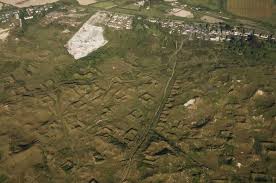
This aerial shot of the site shows the shadows of all those huts!
References:
National War Tokens site with an article about The National Explosives Company
ITV News Report about Heritage status
Blog by Andrew Westcott
Historic England information about Heritage status
Cornwall Live online articles about incident
Penwith Local History Group article about the 1894 explosion
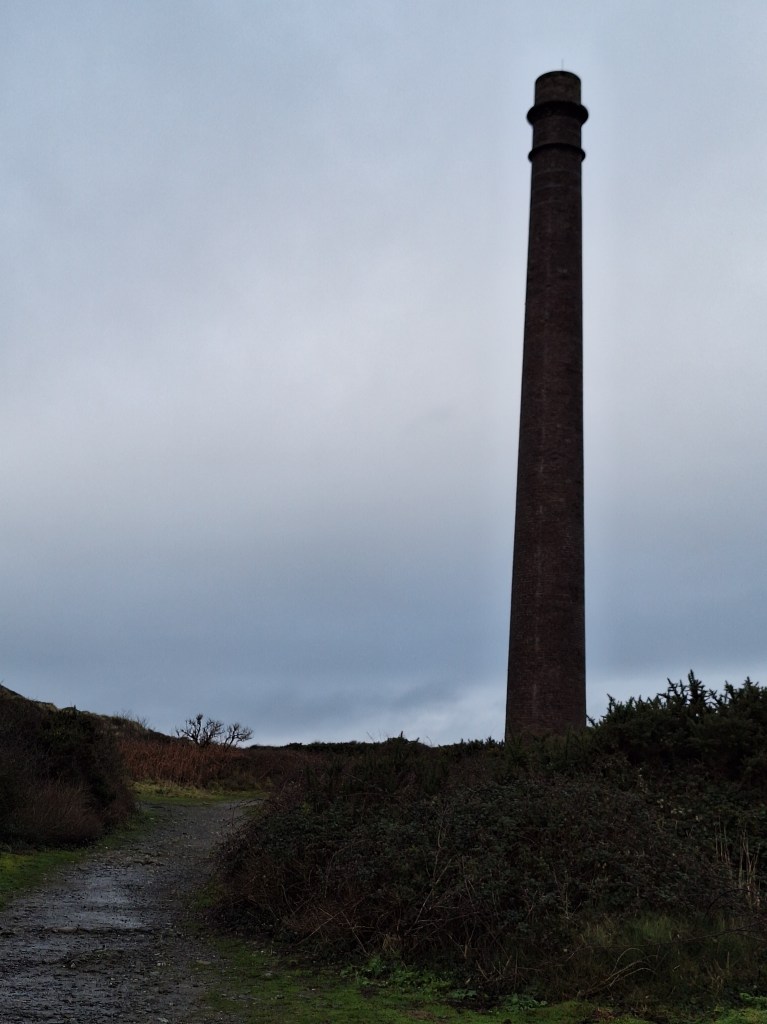
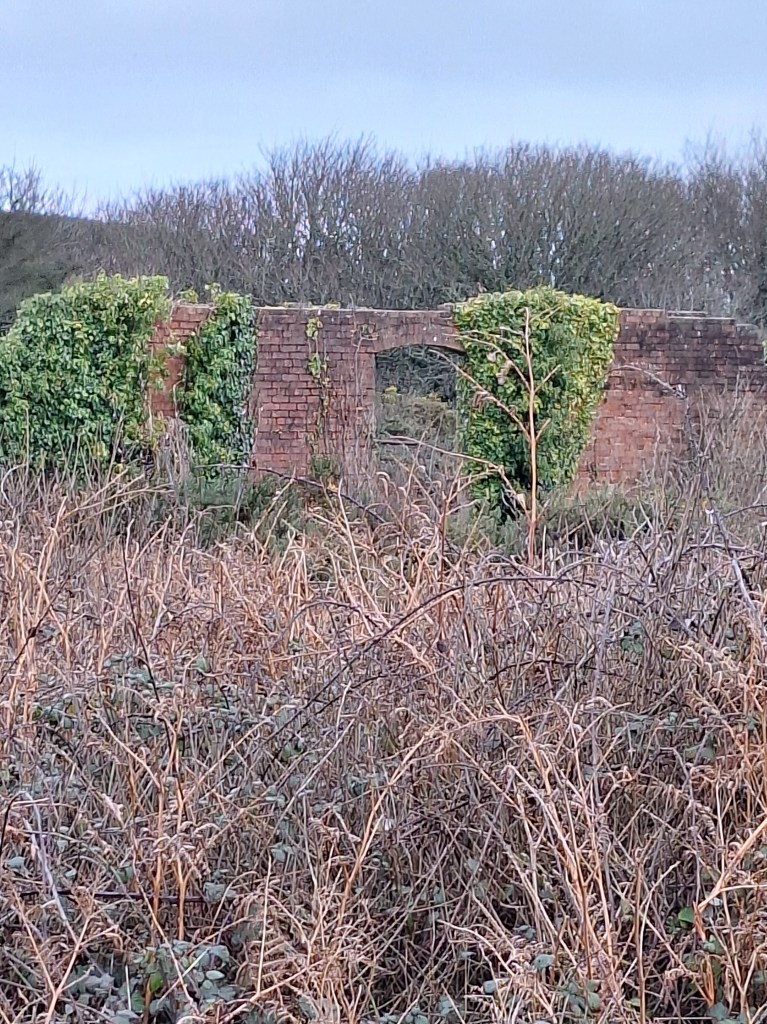
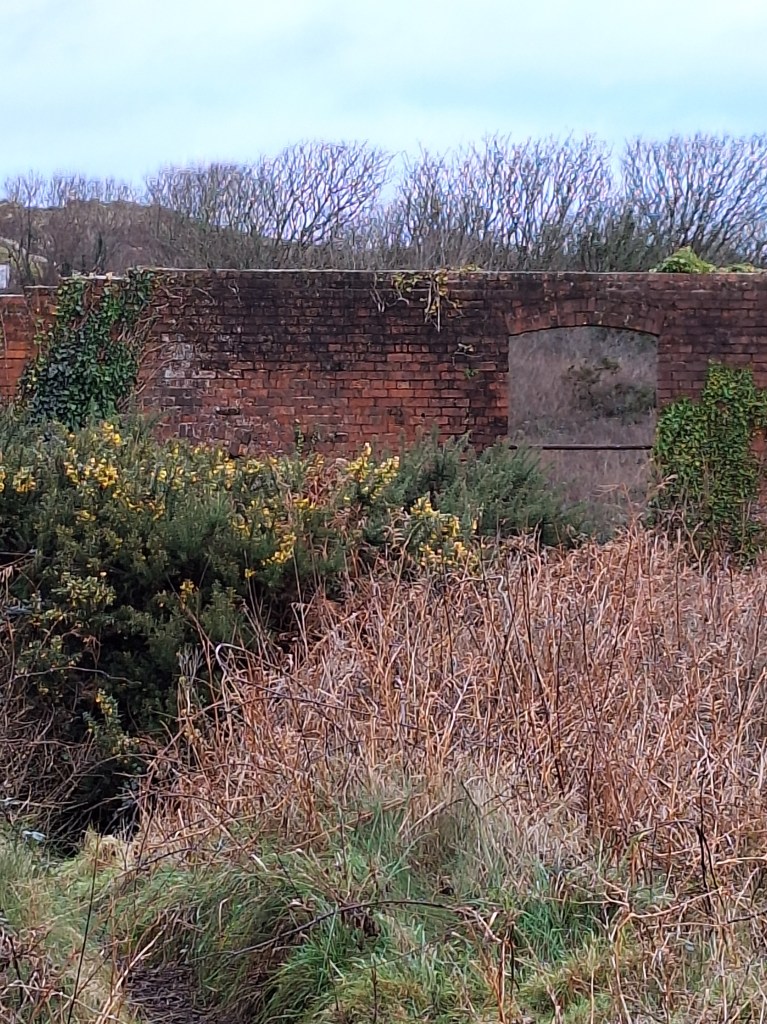

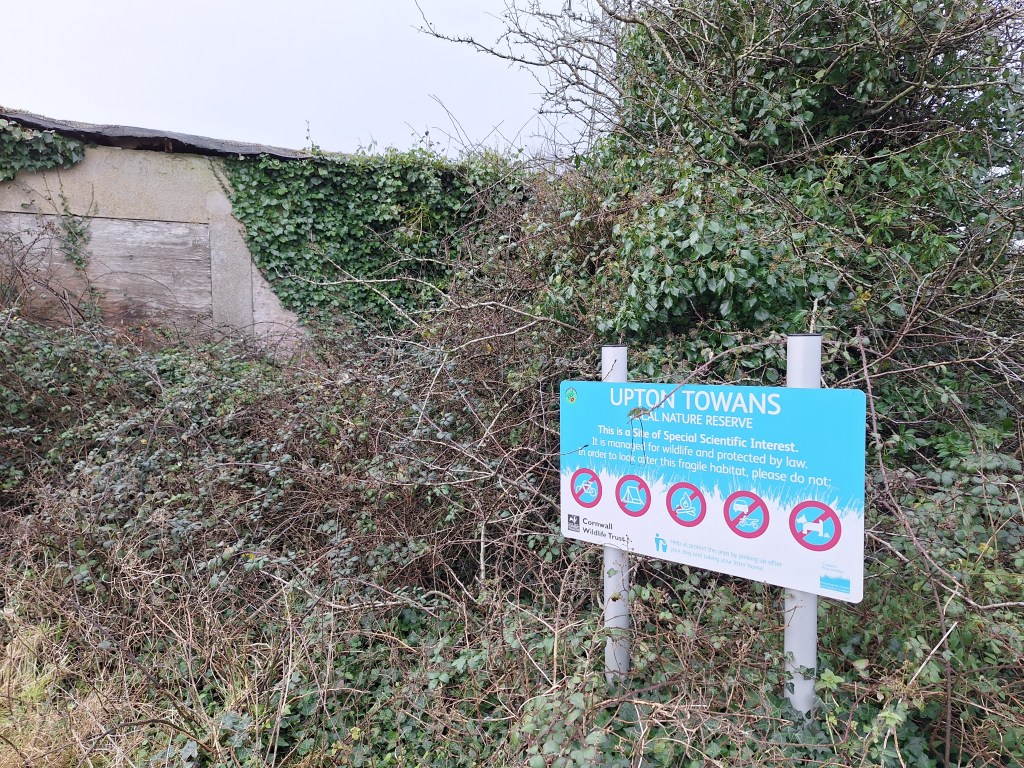
Photos taken on 11th January 2025 of a very damp and misty Upton Towans, showing the remaining chimney and walls.


Leave a Reply