
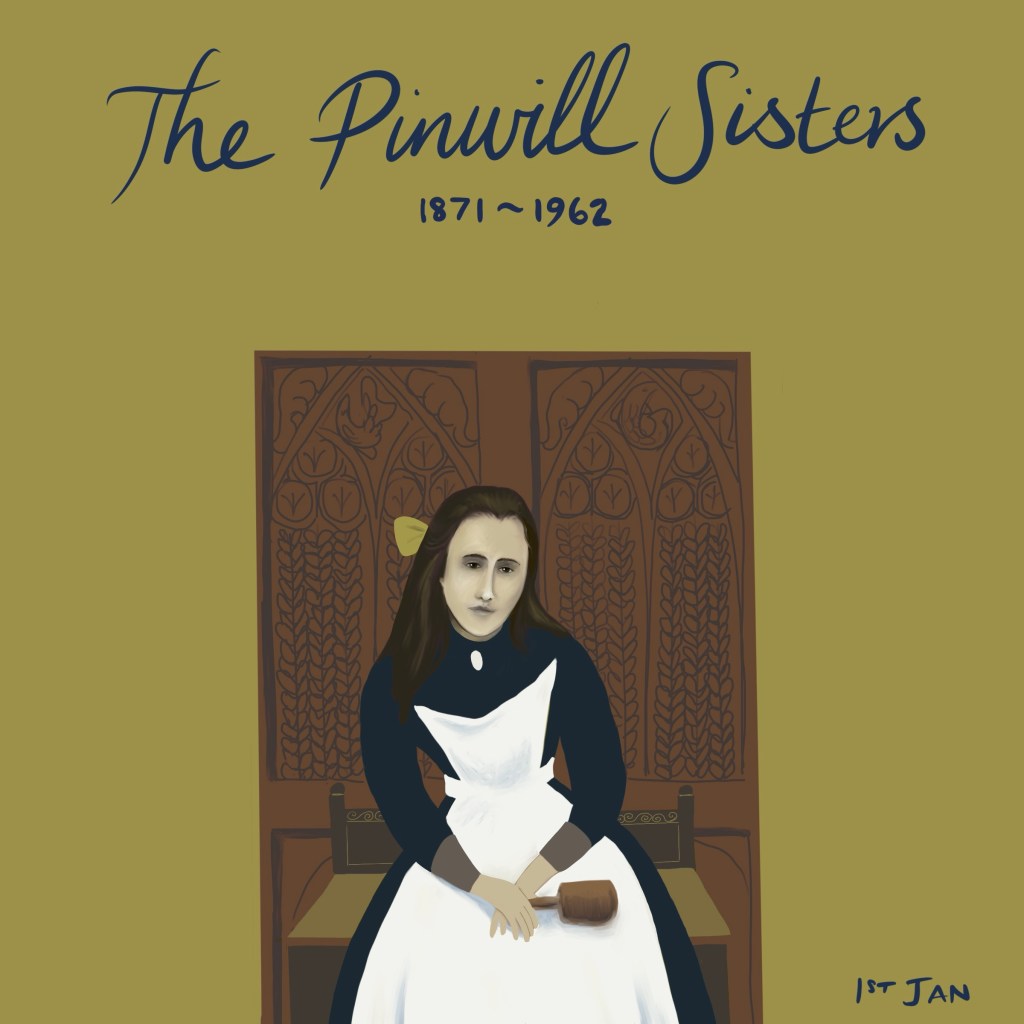
1st January 1957
The Pinwill sisters were made up of Mary, Ethel and Violet, and were professional wood carvers that worked on 99 Cornish churches.
Although they were from Devon, their work in almost 100 Cornwall churches deserved a mention in The Cornish Year.
Mary (1871 – 1962), Ethel (1872 – 1951), and Violet (1874 – 1957) lived with their parents and their other four sisters at Ermington in South Devon. This is where in 1884 their father Rev. Edmund Pinwill started the restoration of his church, and where the three sisters, encouraged by their parents, learned wood carving from the craftsmen led by local carver William Giles. They studied and practised to such an extent that they were noticed by the church architect, Edmund H Sedding, who became their patron.
It was Sedding who encouraged them to set up their own company. And in 1890 Mary moved to premises in Plymouth, naming the company Rashleigh, Pinwill & Co., Ecclesiastical Carvers, joined by her sisters soon afterwards. The name was deliberately chosen by Mary, using her second name, to infer the company was owned by two men, as it was highly unusually for women to move from hobbyist carvers to running a business! They also shared the building with architect patron Sedding.
The business went from strength to strength, with guidance from Edmund H Sedding. The sisters brought to life his Gothic Revival and naturalistic Arts and Crafts inspired designs. It was a match made in heaven and they truly embodied the philosophy of the Arts and Craft movement who championed reviving medieval crafts.
Mary left the company in 1900 to get married and seven years later Ethel moved to Surrey to continue her wood carving career. This left Violet who was sole proprietor right up to her death on 1st January 1957.
The Pinwill sisters work can be seen in 185 churches across Devon and Cornwall, in fact Rashleigh, Pinwill & Co were the most successful wood carving company in the South West. Under Violet the company changed it’s name to V. Pinwill Carver, employing up to 30 carvers and joiners at its height before the start of WWI.
However, after the Great War the business never reached the same level of success, loosing skilled craftsmen to the trenches, changes in taste away from high ornamentation, and being hit by the recession of the 1920s.
Violet continued to work with Edmund Sedding until his death in 1921, however by then Violet had long been creating her own unique designs.
As well as running the business, Violet taught. Starting in 1901, she taught men and boys at Plymouth Technical School’s Art School, and then later at Plymouth Art College.
Violet would ride her bicycle to the railway station or hitch a ride on a delivery cart to her next commission, carrying sacks of wood and her bag of tools balanced, when riding her bike, on the handlebars. I think Violet was a formidable craftswomen, working right up to her death. She was working on a life sized figure of Saint Peter a few days before she died at the age of 82.
References:
The Remarkable Pinwill Sisters by Helen Wilson
An Interview from History with Woodworkers Institute, with Helen Wilson
Article on The Long Nineteenth Century by Marina Walker
The Pinwill Sisters on Wikipedia
Article on Cornish Stained Glass website
The Crantock Church Article on Society for the Protection of Ancient Buildings
Here are some photos of Rashleigh, Pinwill & Co. beautiful work at Lanteglos church, St Wyllow, where the restoration was designed by Edmund Sedding and completed in 1906.
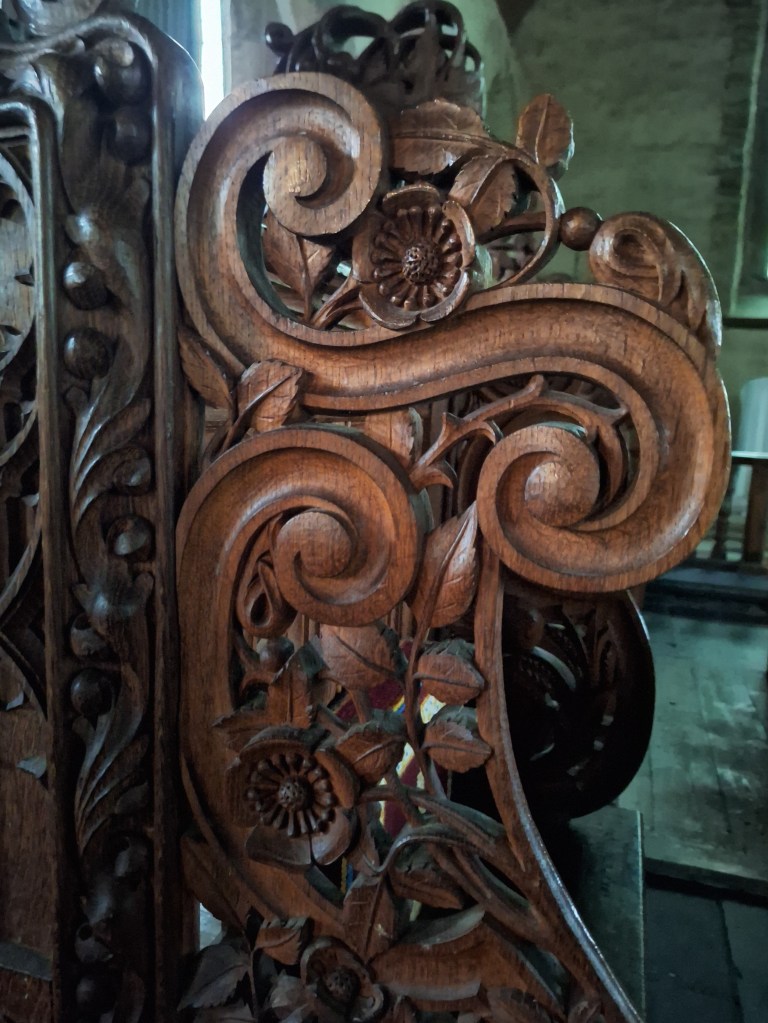
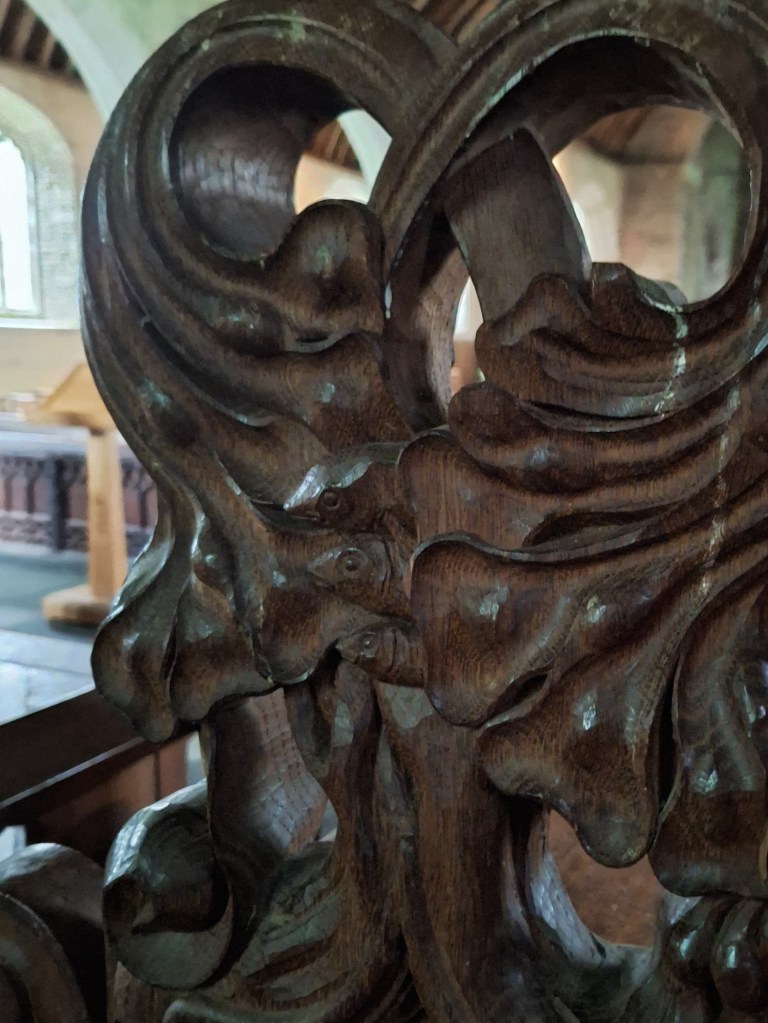
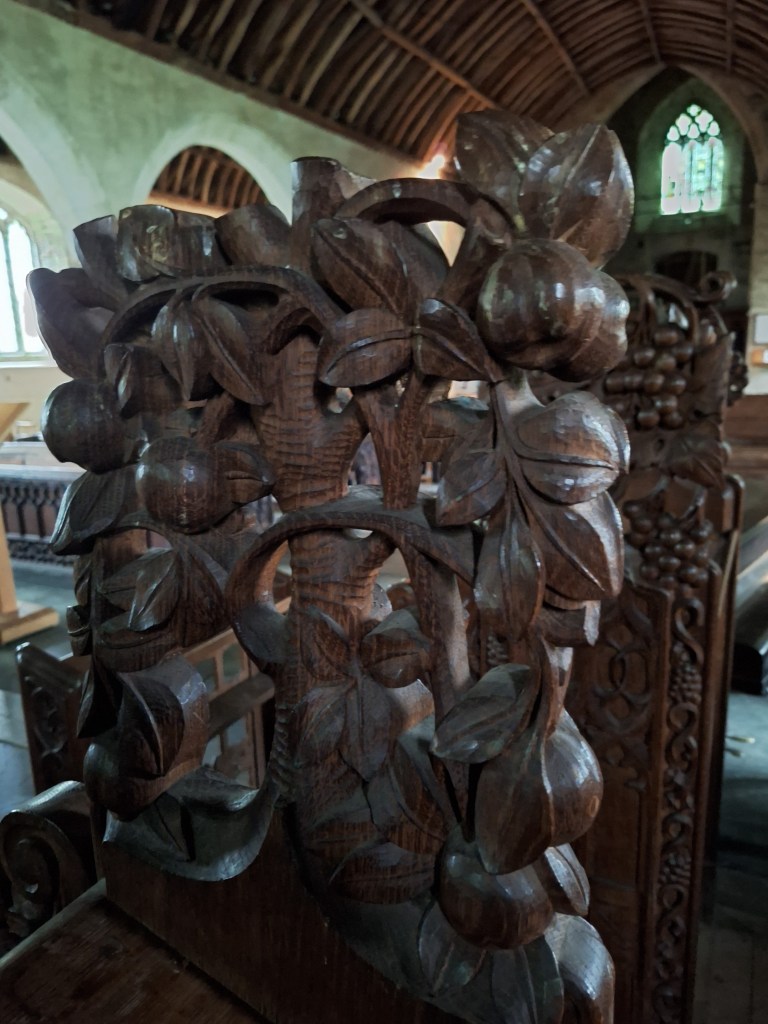
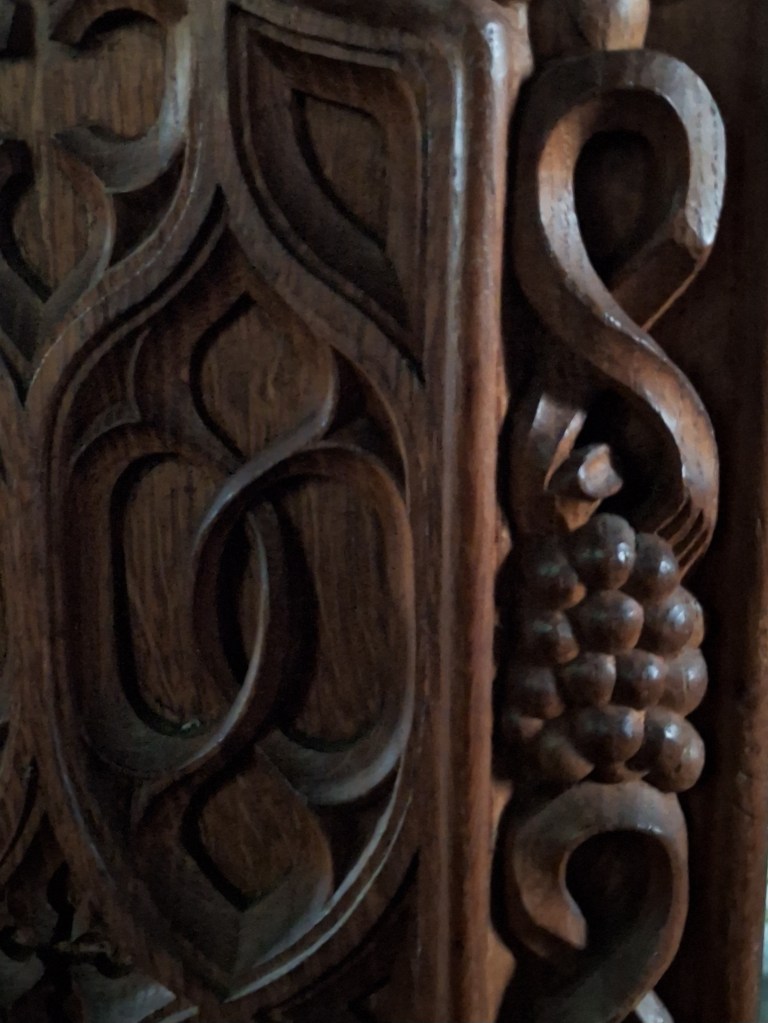
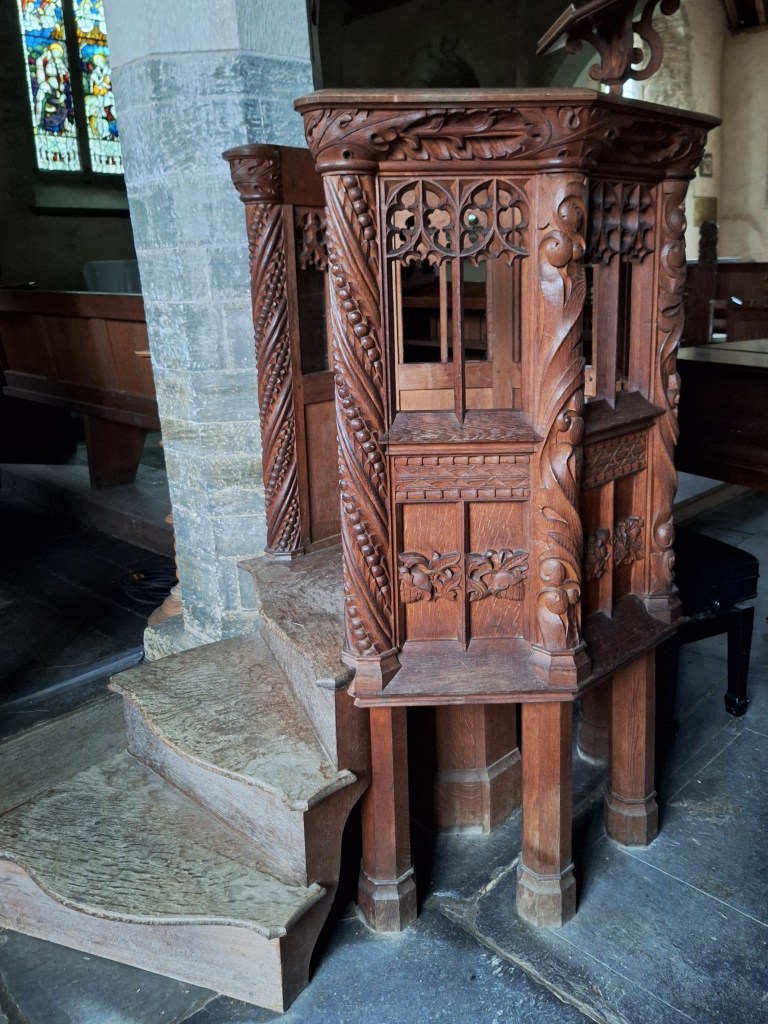
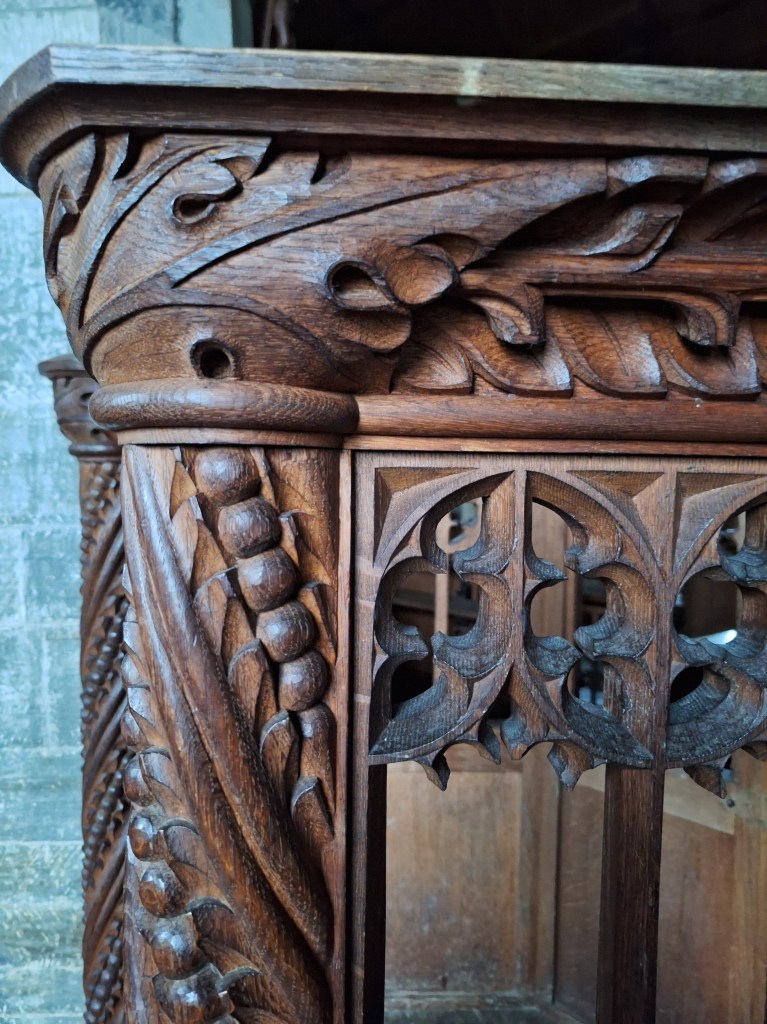
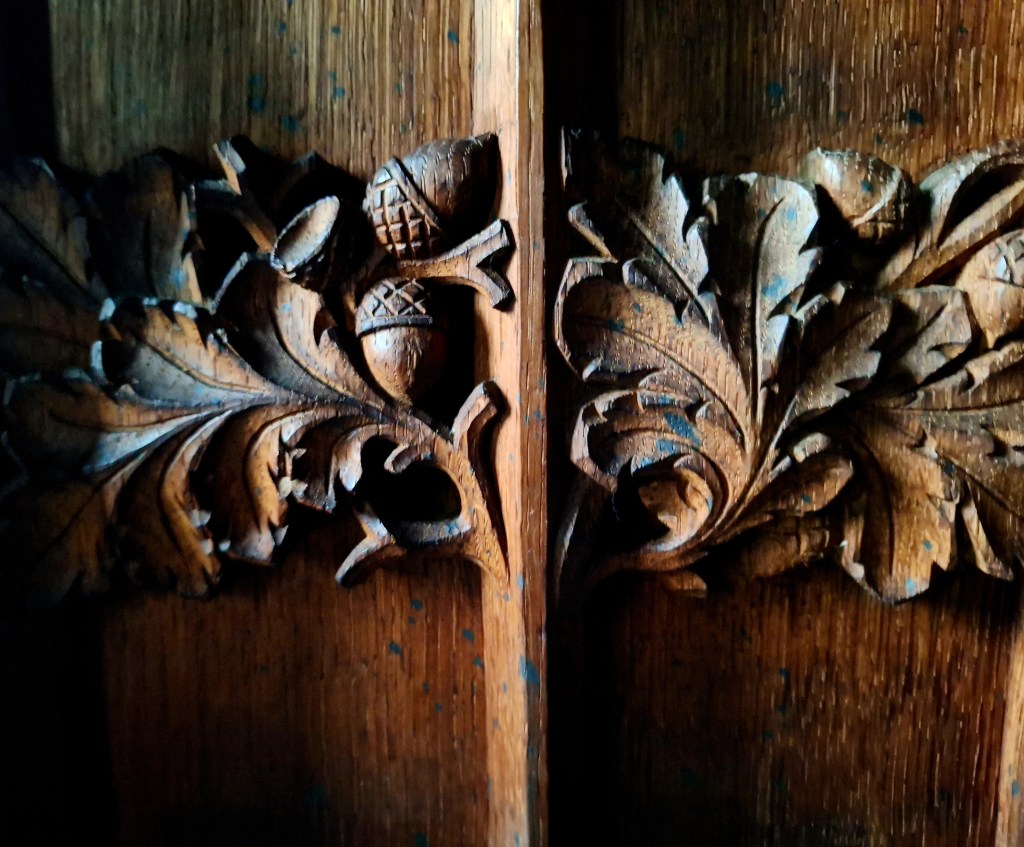
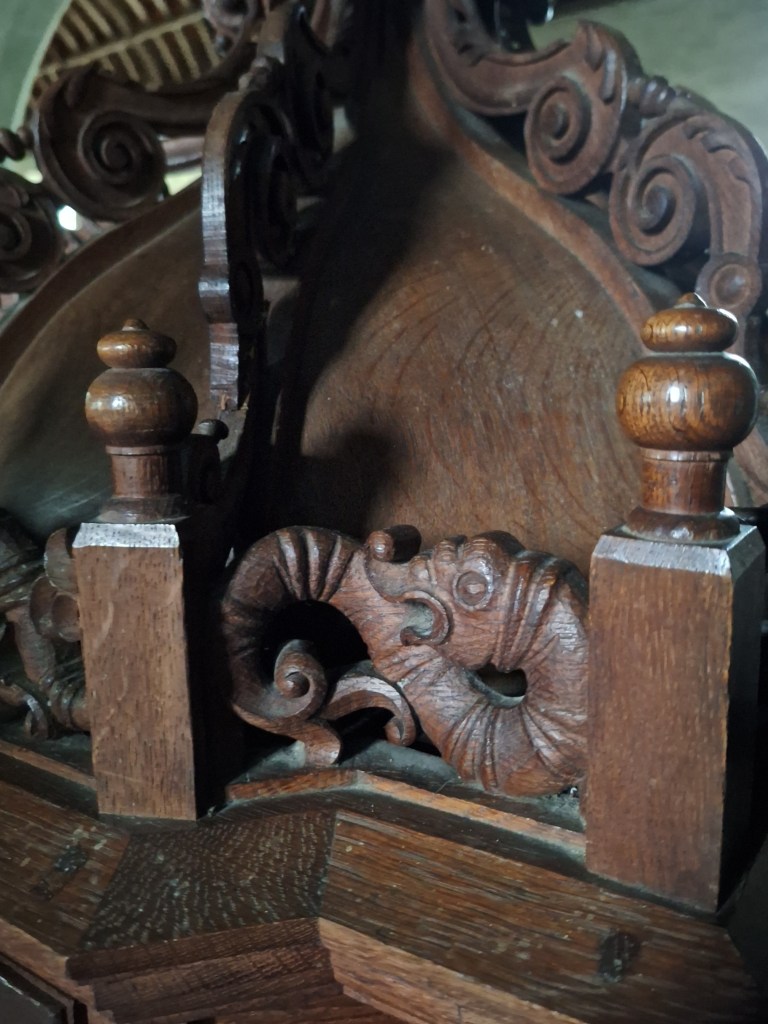
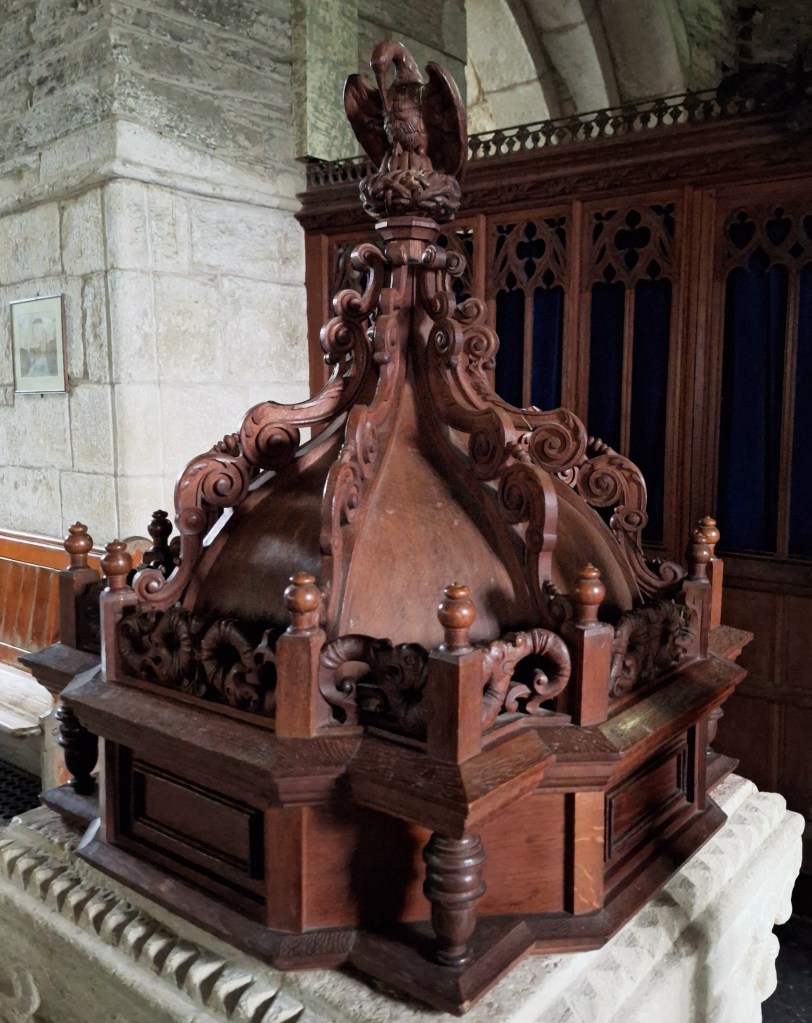
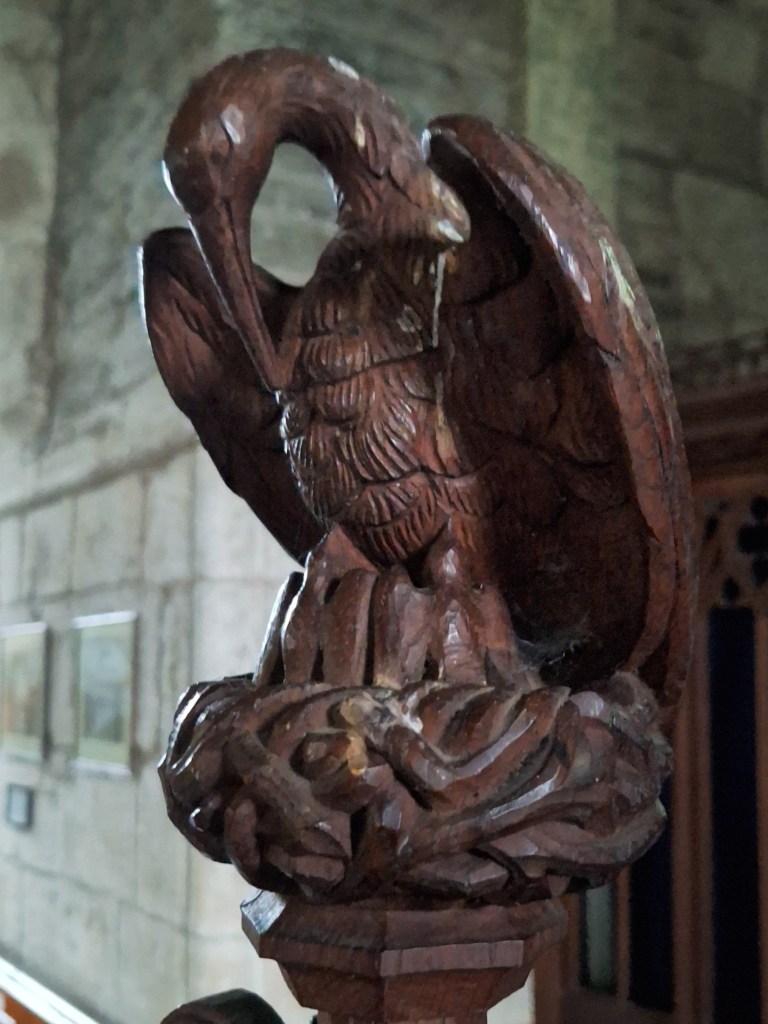
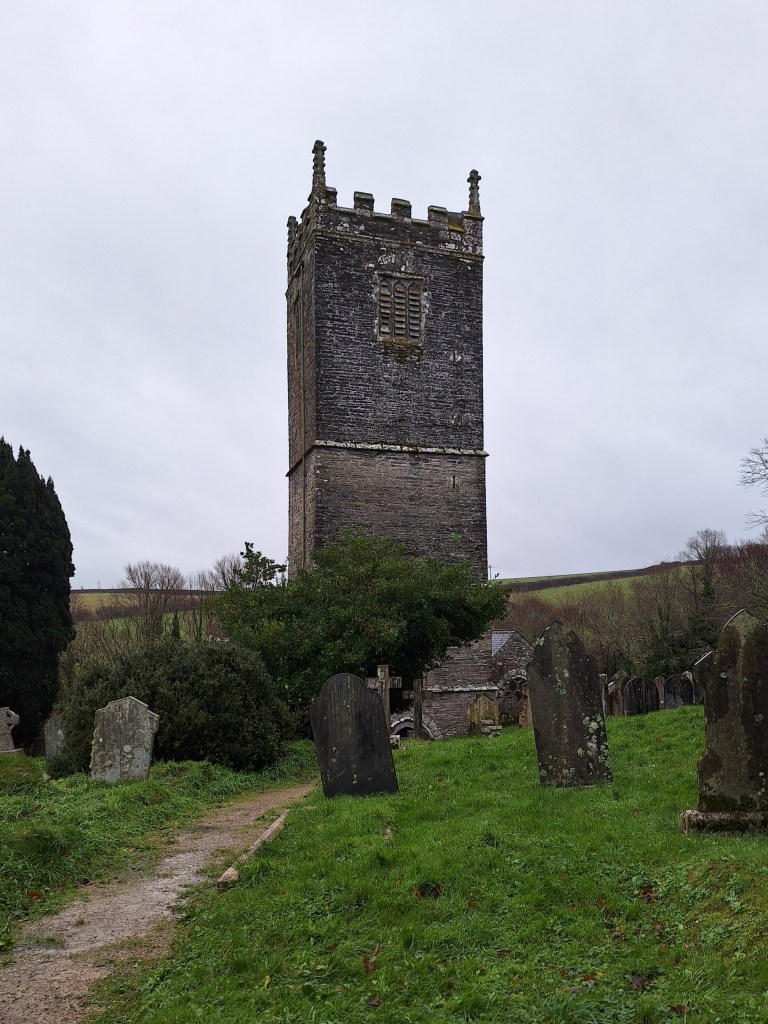
The above photos were taken by me on Wednesday 8th January 2025. It was cold, wet and very dark. Some of the details I only saw once I looked at the photos like the fish swimming in the seaweed!
Sally
 The Sunny Cupboard
Leave a comment